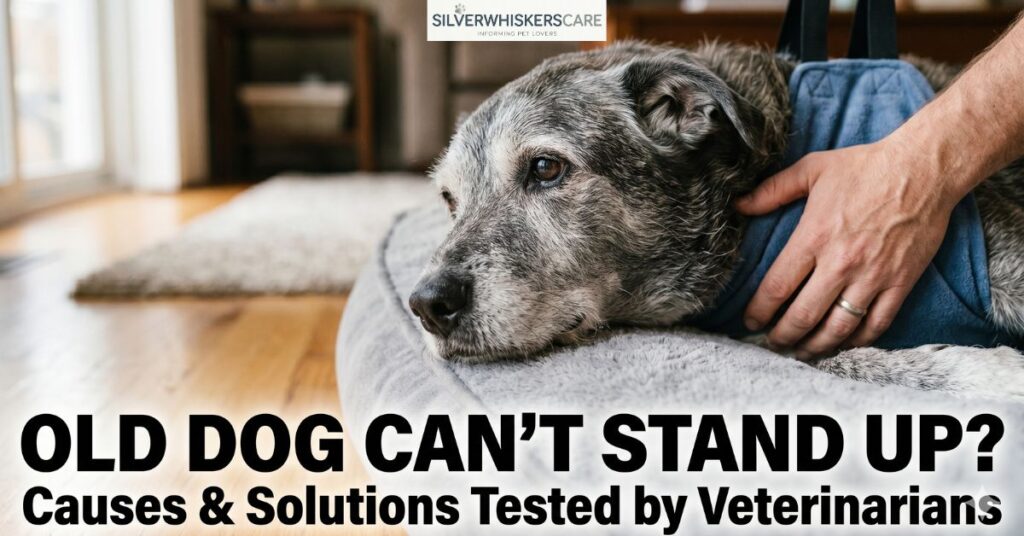
Watching your once-active companion struggle to rise from their bed is one of the most heartbreaking moments for any pet parent. When an old dog can’t get up, your first instinct might be panic. You might wonder if they are in agonizing pain, or worse, if this is the end.
Take a deep breath. While a dog won’t get up and walk is always a serious symptom that requires a vet’s attention, it does not always mean the worst. Often, this sudden loss of mobility is caused by an acute flare-up of inflammation, a manageable neurological hiccup, or simple environmental challenges.
In this vet-backed guide, we will break down the common causes of sudden hind-leg weakness, how to safely lift your dog without hurting them, and the long-term solutions to keep them moving comfortably.
Contents
Immediate Triage: Is It an Emergency?
Before you try to lift or move your dog, you need to assess the situation. Do not pull them by their front legs or drag them, as this can severely damage their spine or worsen a hidden injury.
Observe your dog carefully. You need to call your emergency vet immediately if you notice any of the following 3 Red Flags:
- Complete Paralysis: They are dragging their hind legs behind them with zero movement or feeling in their paws.
- Vocalizing Pain: They whine, cry, or aggressively snap at you when you gently touch their back or legs.
- Sudden Incontinence: They have soiled their bed because they lost control of their bladder or bowels, combined with the inability to stand.
If your dog is alert, not crying out in pain, but simply seems too weak or uncoordinated to push themselves up, proceed to the common causes below.
5 Common Reasons Your Old Dog Can’t Get Up
1. Severe Osteoarthritis (Joint Pain)
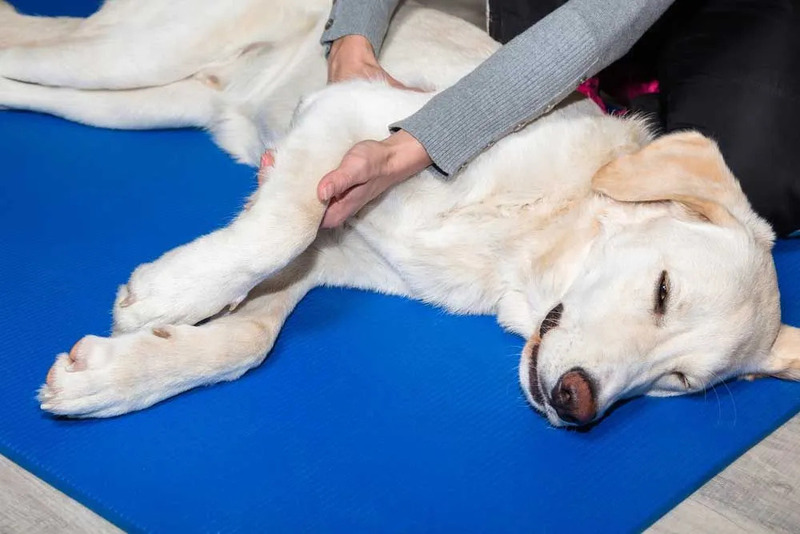
Arthritis is the gradual wearing down of the protective cartilage in the joints. For senior dogs, cold floors, a sudden drop in weather temperature, or just sleeping in a slightly awkward position can trigger severe morning stiffness. Their joints essentially “lock up,” making it incredibly painful to bear weight.
🔗 Related: Want to catch joint pain before it gets this bad? Read our guide on the 7 Early Signs of Arthritis in Dogs You Shouldn’t Ignore.
2. IVDD (Intervertebral Disc Disease)
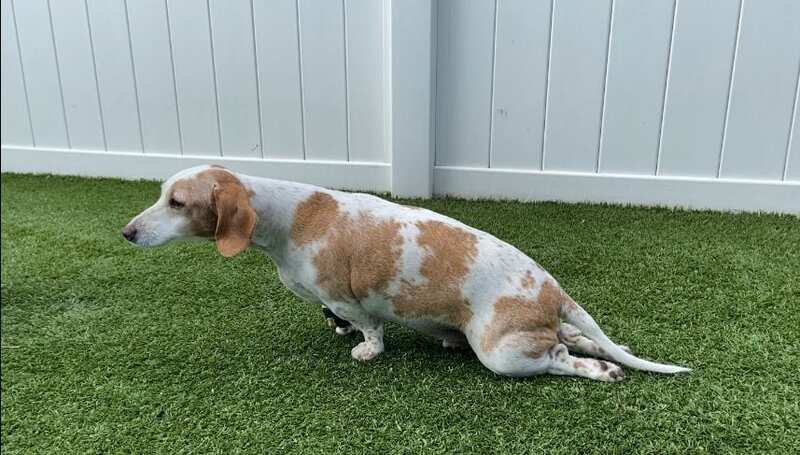
IVDD happens when the cushioning discs between the vertebrae of the spine bulge or burst (a slipped disc). This presses directly on the spinal cord and nerves. Unlike arthritis, which builds up slowly, IVDD often happens very suddenly. A dog with IVDD might go to sleep fine and wake up completely unable to lift their back end.
3. Old Dog Vestibular Disease
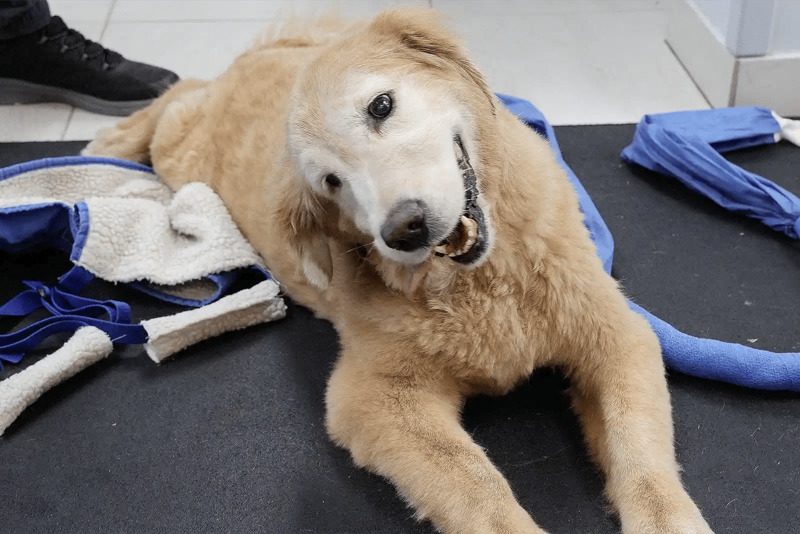
If your senior dog can’t stand up, look closely at their eyes and head. Are their eyes darting rapidly from side to side (nystagmus)? Is their head severely tilted? Vestibular disease affects the inner ear and balance center of the brain. Your dog actually wants to stand, but the room is spinning so violently that they fall over or refuse to get up out of fear.
4. Degenerative Myelopathy (DM)
DM is a painless, progressive disease of the spinal cord, common in breeds like German Shepherds and Boxers. The communication pathway between the brain and the hind legs slowly deteriorates. You might notice them knuckling over (walking on the tops of their paws) before they eventually lose the ability to push themselves up altogether.
5. Age-Related Muscle Atrophy
As dogs age, they naturally lose muscle mass (Sarcopenia). If they have been inactive due to minor joint pain, the muscles in their hind legs can waste away quickly. When they try to stand, you will see their back legs shaking and trembling because they simply lack the physical horsepower to lift their own body weight.

How to Safely Help Your Senior Dog Stand Up
If your vet has ruled out an emergency spinal injury, you can help your dog up safely using these steps:
- Add Immediate Traction: Senior dogs lose confidence on slippery floors. If they are on hardwood or tile, do not let them scramble. Slide a yoga mat, a rubber-backed rug, or even a large towel under their paws so they have a grip to push off against.
- The “Towel Sling” Technique: Take a large, thick bath towel and roll it lengthwise into a long tube. Gently slide the towel under your dog’s belly, right in front of their hind legs (near the groin). Hold both ends of the towel above their back and gently lift upward to support their hind end while they use their front legs to stand. Never lift their entire body off the ground with the towel; just provide a “boost.”
Long-Term Solutions to Keep Them Mobile
The towel trick is great for emergencies, but it is not a sustainable daily solution for you or your dog. To prevent them from getting stuck on the floor and to protect their deteriorating joints, modifying their environment is essential.
Upgrading their resting area to a true pressure-relieving bed and using daily mobility aids can drastically change their quality of life.
🔗 Read Next: Ready to upgrade their environment? Explore our top recommended mobility aids, harnesses, and supplements in our comprehensive guide: Best Joint Care for Older Dogs: Vet-Backed Guide & Aids.
The Hardest Question: When Is It Time?
As pet parents, this is the reality we dread. If your dog is consistently unable to get up, developing bedsores from laying down too long, and refusing to eat or drink, it is time to have a compassionate “Quality of Life” discussion with your veterinarian.
A good day for a dog means they can comfortably do the things they love—eat, potty safely, and interact with you. When the bad days outnumber the good, and medical management is no longer keeping them comfortable, helping them cross the rainbow bridge peacefully is the ultimate act of love.
Conclusion
Finding that your old dog can’t get up is a terrifying moment, but knowledge is your best tool. Whether they are battling osteoarthritis, recovering from a dizzy spell, or losing muscle mass, there are countless ways to support them. Always consult your vet for a proper diagnosis, rely on supportive mobility gear, and most importantly, give your sweet senior the patience and love they deserve in their golden years.

Bol Dang is a lifelong pet lover and the founder of Silver Whiskers Care. After navigating the challenges of caring for his own aging dogs, he dedicated this platform to sharing practical, research-backed advice to help other pet parents improve their senior companions’ quality of life. His mission is to ensure every “silver whisker” spends their golden years in comfort and joy.