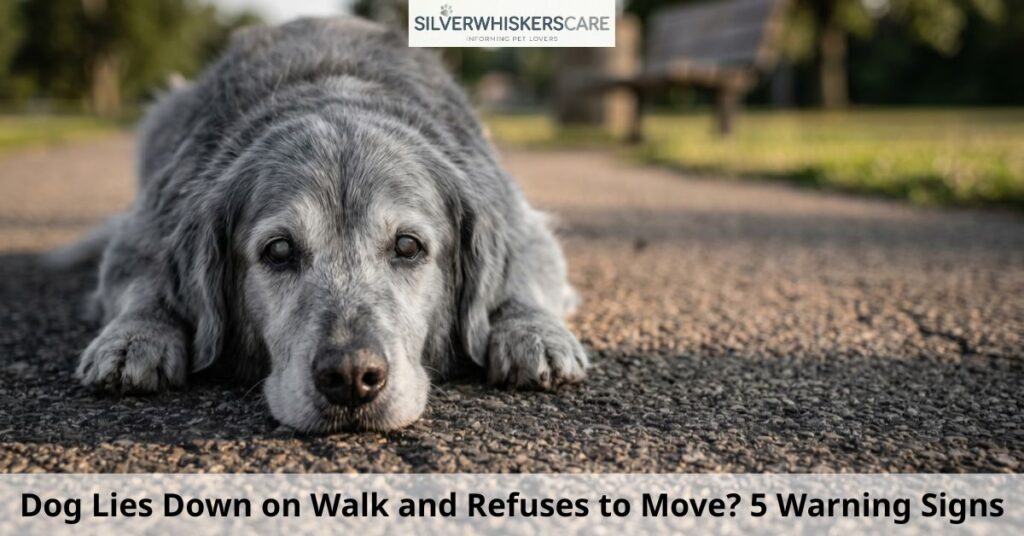
It happens suddenly: you are in the middle of your daily stroll, and your dog lies down on walk and refuses to move. While younger pups might do this out of pure stubbornness or a desire to stay at the park, for a senior dog, this “pancake” behavior is often a critical SOS signal.
When an older dog stops walking, it is rarely a training issue. According to veterinary guidelines, a sudden refusal to walk usually points to underlying pain, exhaustion, or fear.
Here is how to decode what your senior dog is trying to tell you and the safest ways to handle the situation.
Contents
The YMYL Safety Check: 3 Medical Reasons Your Dog Won’t Move
Before assuming your dog is just being stubborn, you must rule out physical distress. Senior dogs are highly susceptible to silent health issues. If your dog lies down on a walk and refuses to move, look for these three medical red flags:
1. Osteoarthritis and Joint Pain
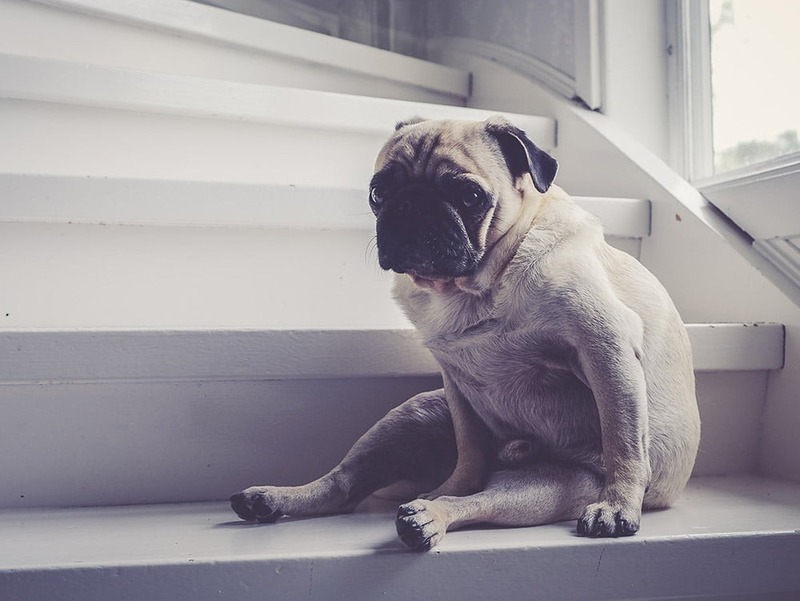
Age-related joint wear and tear, such as Osteoarthritis or Hip Dysplasia, makes walking incredibly painful. A senior dog might start a walk enthusiastically but suddenly lie down when the inflammation in their joints becomes unbearable.
- The Sign: Licking their joints, stiff movements before lying down, or a reluctance to stand back up.
2. Cardiovascular and Respiratory Fatigue
As dogs age, their heart and lungs become less efficient. Conditions like congestive heart failure or laryngeal paralysis mean your dog isn’t getting enough oxygen during physical exertion. They drop to the ground simply because they are out of breath.
- The Sign: Heavy, raspy panting, coughing during the walk, or pale/bluish gums.
3. Heat Exhaustion
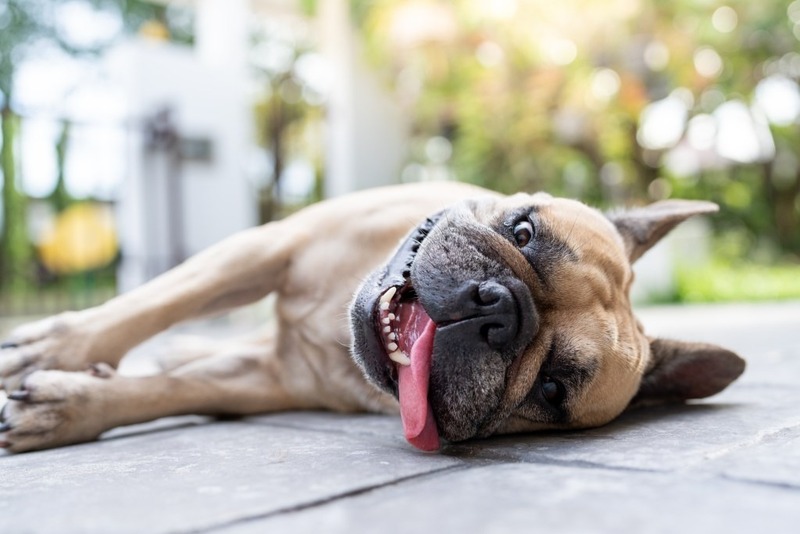
Senior dogs cannot regulate their body temperature as effectively as they used to. A walk that feels mildly warm to you can quickly trigger heat exhaustion in an older dog, prompting them to lie down in an attempt to cool their belly on the pavement or grass.
- The Sign: Excessive drooling, rapid heartbeat, and extreme lethargy.
Behavioral Causes: Fear vs. Stubbornness
If you and your vet have completely ruled out medical issues, the refusal to move might be psychological.
1. The “Protest Drop”
Sometimes, your dog just doesn’t want to go in the direction you are pulling them. They might want to sniff a specific bush or avoid a route they find boring. By dropping their body weight, they are effectively hitting the brakes.
2. Overstimulation and Anxiety
A sudden loud noise, an aggressive dog in the distance, or a chaotic environment can cause “trigger stacking.” When a dog feels overwhelmed, lying down is a coping mechanism to make themselves smaller and assess the threat.
What to Do (And What NOT to Do) Safely
If your dog lies down on a walk and refuses to move, your immediate reaction determines their safety. Follow this vet-approved protocol:
- DO NOT Pull or Drag: Never yank the leash. Dragging a dog—especially a senior—can cause severe spinal micro-trauma, damage their trachea, and destroy their trust in you.
- Assess their Vitals: Kneel beside them. Check their breathing rate and look at their gums (they should be a healthy pink, not white or blue). If they are panting heavily, offer a small amount of water.
- Give Them a “Reset” Break: Wait 3 to 5 minutes. Let them rest without any pressure. Often, a short break is all their aging joints need to recover.
- Change the Direction: If it is a behavioral protest, try enthusiastically changing direction toward home. Use a high-value treat to lure them back onto their feet.
- Call for Backup: If they are physically incapable of walking, do not force them. Carry them home if they are small enough, or call a family member to pick you up in a car.
Frequently Asked Questions About Dogs Refusing to Walk
Why does my older dog suddenly stop walking and lie down?
In senior dogs, suddenly stopping and lying down is usually a sign of physical discomfort. The most common causes are osteoarthritis joint pain, cardiovascular fatigue, or heat exhaustion. It should be treated as a medical red flag rather than stubborn behavior.
Should I pull my dog if they refuse to move?
No, you should never pull or drag a dog that refuses to move. Pulling can cause severe neck and spinal injuries, especially in older dogs with fragile joints. It also increases their anxiety and makes them more likely to resist walking in the future.
How do I get my dog to stand up after they lie down on a walk?
First, give them a few minutes to rest and catch their breath. Check for signs of pain or heatstroke. If they are medically safe, use a cheerful voice and a high-value treat to lure them up, or try walking in the direction of your home.
How do I know if my dog is too tired to walk?
Signs of extreme fatigue include heavy and prolonged panting, slowing their pace significantly before stopping, excessive drooling, lagging behind the leash, and a sudden refusal to take another step.
Read more:
- 7 Early Signs of Arthritis in Dogs You Shouldn’t Ignore (Watch Out for #4!)
- Best Joint Care for Older Dogs: Vet-Backed Guide & Aids
- Old Dog Can’t Get Up? 5 Hidden Causes & How to Help Them Stand
- Why Your Dog Doesn’t Want to Get Up in the Morning: Lazy or in Pain?

Bol Dang is a lifelong pet lover and the founder of Silver Whiskers Care. After navigating the challenges of caring for his own aging dogs, he dedicated this platform to sharing practical, research-backed advice to help other pet parents improve their senior companions’ quality of life. His mission is to ensure every “silver whisker” spends their golden years in comfort and joy.