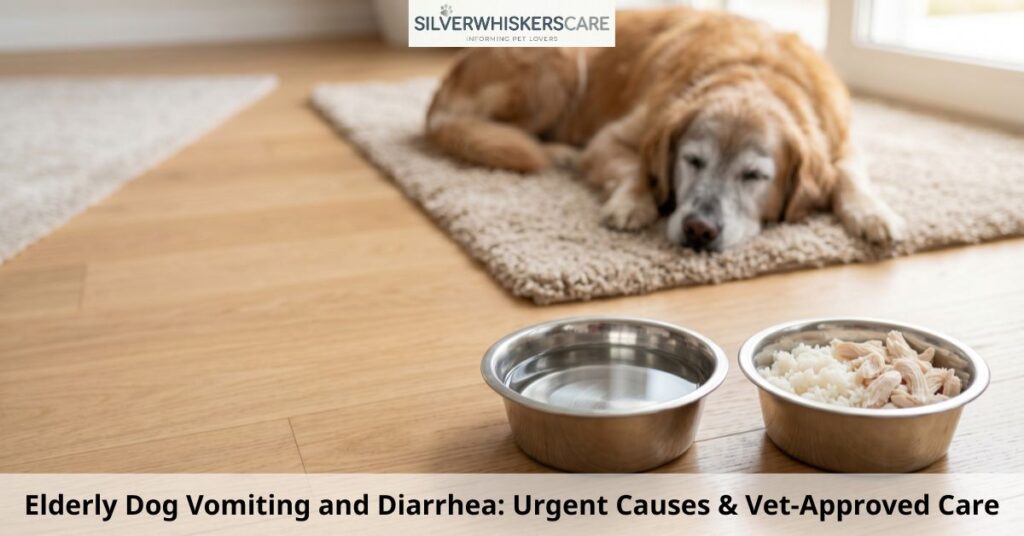
When an older dog has an upset stomach, it is a cause for concern. But when an elderly dog vomiting and diarrhea at the same time, the situation becomes significantly more urgent.
Because senior dogs have weaker immune systems and less bodily reserve, expelling fluid from both ends can lead to severe, life-threatening dehydration in a matter of hours. This is not a “wait and see for a few days” scenario.
In this vet-aligned guide, we will cut straight to the facts: why this combination of symptoms is so dangerous, the top medical causes in senior dogs, and the red flags that mean you need to rush to the emergency vet.
Contents
The Hidden Danger: Rapid Dehydration
To understand why this is an emergency, you need to understand how a senior dog’s body works. Vomiting empties the stomach, while diarrhea rapidly flushes fluids and essential electrolytes (like sodium and potassium) out of the intestines.
When both happen simultaneously, the dog’s body dries out incredibly fast. This drop in fluid volume lowers their blood pressure, which means their kidneys and other vital organs are not getting enough oxygen. In an elderly dog, this can trigger acute organ failure.
How to Check for Dehydration (The “Tent” Test): Gently pull up the loose skin at the back of your dog’s neck. If the skin snaps back into place immediately, they are hydrated. If the skin stays lifted in a “tent” shape and falls back slowly, your dog is severely dehydrated and needs intravenous (IV) fluids from a vet immediately.
4 Causes of Elderly Dog Vomiting and Diarrhea
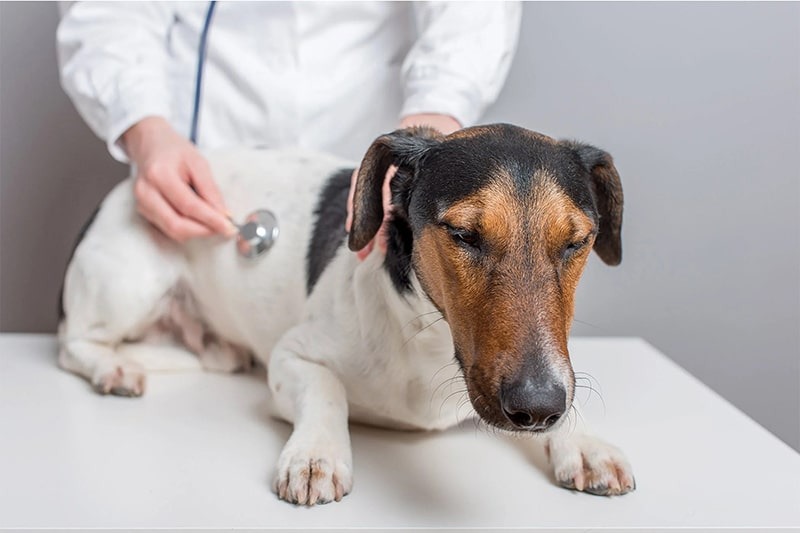
If your senior dog is experiencing distress at both ends, veterinarians typically narrow it down to these four primary culprits:
Severe Dietary Indiscretion & Pancreatitis
If your old dog got into the trash, ate a rich human meal, or consumed a high-fat treat, it can trigger Pancreatitis (severe inflammation of the pancreas). Pancreatitis causes intense abdominal pain, explosive diarrhea, and violent vomiting.

Acute Gastroenteritis
This is a fancy veterinary term for a highly inflamed stomach and intestines. It is often caused by bacterial infections (like Salmonella from eating spoiled food outside), viral infections, or intestinal parasites like Giardia.
Organ Dysfunction (Kidney or Liver Failure)
As dogs enter their golden years, chronic conditions are common. If the liver or kidneys begin to fail, they stop filtering toxins from the blood. These circulating toxins cause severe gastrointestinal distress, resulting in both vomiting and diarrhea.
Sudden Diet Changes
A senior dog’s digestive tract is less adaptable than a puppy’s. If you switch their kibble brand abruptly without a slow 7-day transition, their gut flora cannot process the new ingredients, leading to immediate rejection from both the stomach and the bowels.
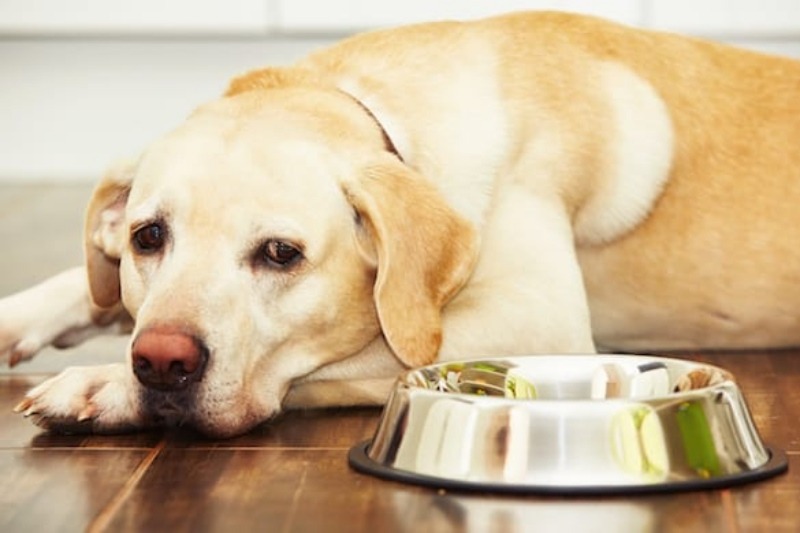
Emergency Red Flags: When to Go to the ER
Do not attempt to treat an elderly dog at home if they are showing signs of shock or severe illness. Go to the emergency vet immediately if you observe:
- Blood: Bright red blood or dark, tarry stools (melena), or vomit that looks like coffee grounds.
- Lethargy & Weakness: They cannot stand up, or they seem disoriented and unresponsive.
- Pale Gums: Lift their lip. Healthy gums are bubblegum pink. If they are white, grey, or sticky to the touch, they are in shock or severely dehydrated.
- Inability to Keep Water Down: If they vomit immediately after drinking even a small amount of water.
- Duration: The symptoms last for more than 24 hours.
At-Home Care for Mild Cases
If your dog is still energetic, has pink gums, and the symptoms are mild (only 1 or 2 episodes), you can try to soothe their GI tract at home:
- The 12 to 24-Hour Fast: Remove all food. The stomach and intestines are inflamed and need complete rest to heal.
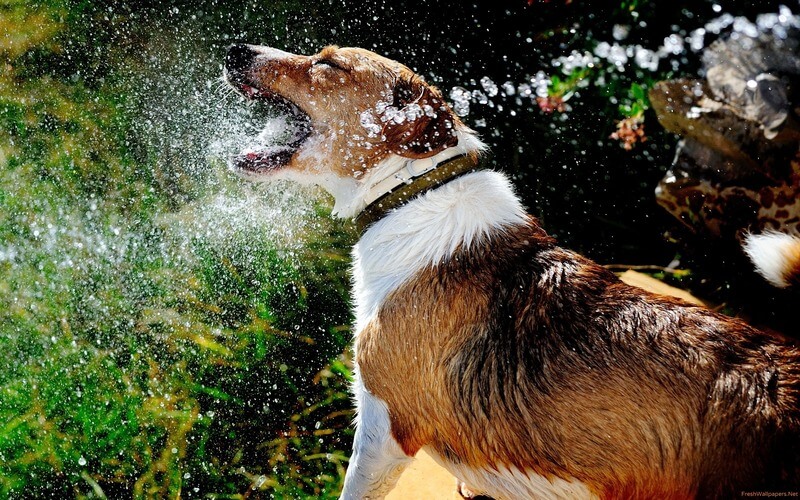
- Hydrate Slowly: Never let them gulp water. Offer an ice cube to lick or just a few tablespoons of water or unflavored Pedialyte every 1-2 hours.
- The Bland Diet Recovery: After 24 hours with no vomiting, offer a tiny portion of boiled, unseasoned chicken breast mixed with plain white rice or 100% pure canned pumpkin (not pie filling). Feed small meals 3-4 times a day until their stool firms up.
Final thought: While a young, healthy dog might shake off a stomach bug, an elderly dog vomiting and diarrhea is a high-risk situation. It is always safer to consult your veterinarian early rather than waiting until dehydration sets in.
Frequently Asked Questions
What should I do if my senior dog is vomiting and has diarrhea?
If the symptoms are mild and there are no red flags (like blood or lethargy), withhold food for 12 to 24 hours to let their digestive tract rest. However, do not restrict water. Offer small sips or ice cubes frequently to prevent severe dehydration. If symptoms persist beyond 24 hours, contact your vet immediately.
How quickly can an elderly dog get dehydrated?
Very quickly. Because senior dogs have weaker immune systems and less bodily reserve, fluid loss from both ends can cause severe, life-threatening dehydration in just a matter of hours, potentially leading to organ failure.
Can I give my senior dog Pepto Bismol or Imodium?
No. You should never give your dog over-the-counter human medications for diarrhea or vomiting without explicit instructions from your veterinarian. These medications can be highly toxic to dogs or mask the symptoms of a fatal underlying condition like Pancreatitis.
What is the best bland diet for an older dog with an upset stomach?
Once the vomiting has stopped for 24 hours, the best bland diet is a small portion of boiled, unseasoned chicken breast mixed with plain white rice. You can also mix in a spoonful of 100% pure canned pumpkin (not pie filling) to help firm up their stool.
Related Health Guide:
- Senior Dog Throwing Up Yellow Bile: Causes, Home Care & When to Worry
- Elderly Dog Vomiting After Eating? Causes, Red Flags & What to Do
- Elderly Dog Vomiting White Foam: Causes, Red Flags & What to Do

Bol Dang is a lifelong pet lover and the founder of Silver Whiskers Care. After navigating the challenges of caring for his own aging dogs, he dedicated this platform to sharing practical, research-backed advice to help other pet parents improve their senior companions’ quality of life. His mission is to ensure every “silver whisker” spends their golden years in comfort and joy.