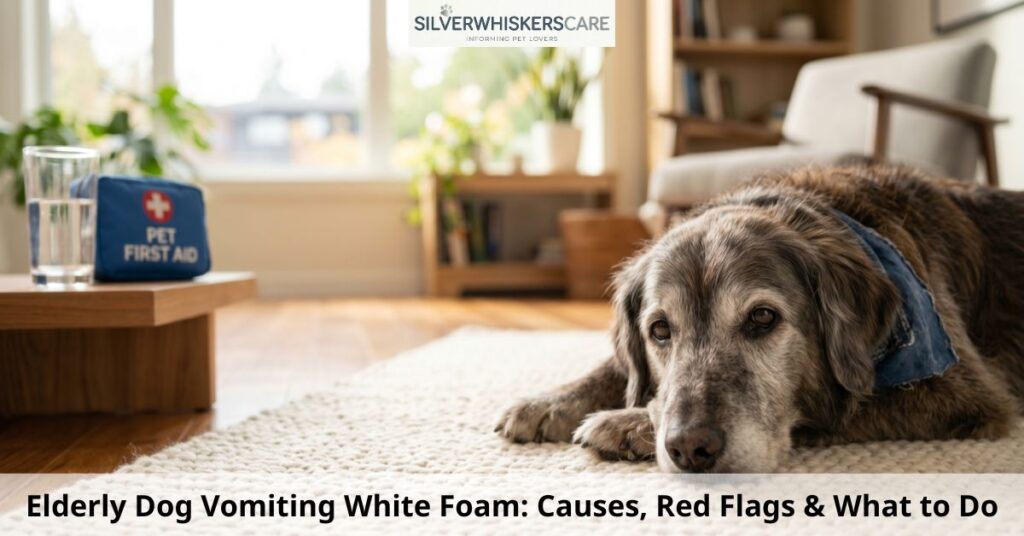
Seeing your elderly dog vomiting white foam can be incredibly alarming. It looks dramatic, and as a pet parent, your mind immediately jumps to the worst-case scenarios.
First, take a breath. White foam is simply a mixture of your dog’s saliva, swallowed air, and stomach juices. While it can be a symptom of a severe medical emergency, it is also frequently caused by something as simple as an empty stomach.
In this vet-aligned guide, we will break down exactly why your senior dog is throwing up white foam, the critical red flags that mean you need an emergency vet, and how to care for them at home.
Contents
Top 5 Reasons Your Elderly Dog is Vomiting White Foam
Because older dogs have weaker immune systems and more fragile digestive tracts, veterinarians look for a specific set of age-related issues when diagnosing foamy vomit.
1. Bilious Vomiting Syndrome (Empty Stomach)
This is the most common and least dangerous cause. When a dog’s stomach is completely empty for a long period (like overnight), stomach acid builds up and irritates the stomach lining. This causes them to vomit a mixture of yellow bile and white foamy saliva, usually first thing in the morning.
- The Fix: Feed your senior dog a small snack right before bed to keep their stomach settled overnight.
2. Kennel Cough or Upper Respiratory Issues
Sometimes, what looks like vomiting is actually a severe cough. If your dog has Kennel Cough, or age-related conditions like a collapsing trachea, they may cough so hard and so repeatedly that they trigger their gag reflex, resulting in a puddle of white, foamy spit-up.
3. Gastrointestinal Distress (Eating the Wrong Thing)
Senior dogs have sensitive stomachs. If they ate grass in the yard, nibbled on a toxic plant, or got into the trash, their stomach will quickly try to expel it. The white foam appears as the stomach violently churns to get rid of the irritant.
4. Kidney Disease or Systemic Illness
As dogs age, chronic conditions like Kidney Disease become more prevalent. When failing kidneys cannot filter toxins from the blood, it leads to nausea, gastric ulcers, and vomiting. If your elderly dog is drinking excessive amounts of water and vomiting white foam, a blood test is necessary.
5. Bloat (Gastric Dilatation-Volvulus) – A True Emergency
In deep-chested older dogs, the stomach can fill with gas and twist on itself. The dog will become highly distressed, pace around, and repeatedly try to vomit. Because the stomach is twisted, food cannot come up—only white foamy saliva makes it out. This is a life-threatening emergency.
When to Go to the Emergency Vet
You know your dog best. An isolated incident of vomiting white foam in an otherwise happy, energetic dog might just require monitoring. However, because elderly dogs dehydrate quickly, seek emergency veterinary care if you notice:
- Unproductive Retching: They keep heaving and pacing but only small amounts of foam come out.
- Lethargy: They are extremely weak, cannot stand, or hide in a dark corner.
- Pale or Blue Gums: A sign of shock or lack of oxygen.
- Frequent Vomiting: They vomit foam multiple times within a few hours and cannot keep water down.
- A Distended (Swollen) Abdomen: Their belly feels hard and looks bloated.
At-Home Care: What to Do Next
If your senior dog threw up white foam once, has pink gums, and seems perfectly normal otherwise, you can implement supportive at-home care:
- The 12-Hour Fast: Pick up their food bowl. Give their GI tract 12 hours to rest and reset.
- Hydration is Key, but Go Slow: Do not let them gulp a huge bowl of water, which will irritate the stomach again. Offer ice cubes to lick or just a few tablespoons of water every hour.
- Transition to a Bland Diet: After 12 hours of no vomiting, feed them a small portion of boiled, unseasoned chicken breast and plain white rice.
Final Note: While a puppy might bounce back quickly from a stomach bug, an elderly dog vomiting white foam should be monitored very closely. If the vomiting persists for more than 24 hours, call your vet.
Frequently Asked Questions
Why is my senior dog throwing up white foam in the morning?
If your elderly dog vomits white foam or yellow bile early in the morning before breakfast, they likely have Bilious Vomiting Syndrome. This occurs when the stomach remains empty for too long, causing acid to irritate the lining. Feeding a small snack before bedtime can often resolve this.
Is white foam vomit in an old dog always an emergency?
Not always, but it can be. If your dog vomits once and acts normally, it may just be an upset stomach. However, if they are repeatedly retching, have a swollen belly, or act distressed, it could be a sign of Bloat (GDV), which is a life-threatening emergency.
What is the difference between coughing and vomiting white foam?
Often, what looks like vomiting foam is actually a severe cough. If your dog has a “honking” cough and then spits up a small puddle of foam, it is more likely a respiratory issue like Kennel Cough or a collapsing trachea rather than a stomach problem.
How can I treat my elderly dog’s foamy vomiting at home?
For mild cases, withhold food for 12 hours to let the stomach rest. Offer small amounts of water or ice cubes to prevent dehydration. Once the vomiting stops, introduce a bland diet of boiled chicken and white rice for 24-48 hours.
🔗 Related Health Guide:
- Senior Dog Throwing Up Yellow Bile: Causes, Home Care & When to Worry
- Elderly Dog Vomiting After Eating? Causes, Red Flags & What to Do

Bol Dang is a lifelong pet lover and the founder of Silver Whiskers Care. After navigating the challenges of caring for his own aging dogs, he dedicated this platform to sharing practical, research-backed advice to help other pet parents improve their senior companions’ quality of life. His mission is to ensure every “silver whisker” spends their golden years in comfort and joy.