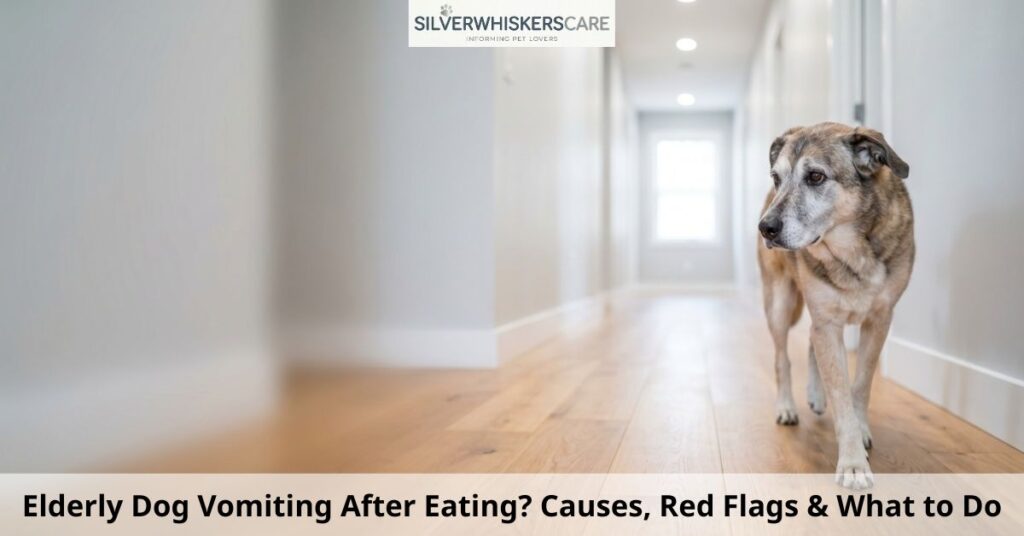
Watching your senior dog throw up their meal right after eating is a terrifying experience. While an occasional upset stomach can happen to any dog, an elderly dog vomiting after eating requires immediate attention. In older dogs, their internal organs are more fragile, and vomiting is often an early warning sign of underlying systemic diseases rather than just a simple “tummy ache.”
In this vet-aligned guide, we will cut through the confusion. We’ll help you determine if your dog is actually vomiting or just regurgitating, explain the top age-related medical causes, and outline the exact steps you need to take right now.
Contents
Step 1: Is it Vomiting or Regurgitation? (Crucial Difference)
Before you call the vet, you need to know exactly what just happened. Vets treat these two actions very differently.
- Regurgitation (Esophageal Issue): This happens passively and almost immediately after swallowing. The dog simply lowers its head, and undigested food falls out, often shaped like a tube. There is no heaving, no stomach contractions, and no nausea beforehand. In senior dogs, this can indicate Megaesophagus or a tumor in the throat.
- Vomiting (Stomach/Intestinal Issue): This is an active process. You will see your dog drooling, pacing, or licking their lips (nausea). Then, their stomach will heave forcefully, and they will retch. The vomit usually contains partially digested food, yellow bile, or stomach fluid.
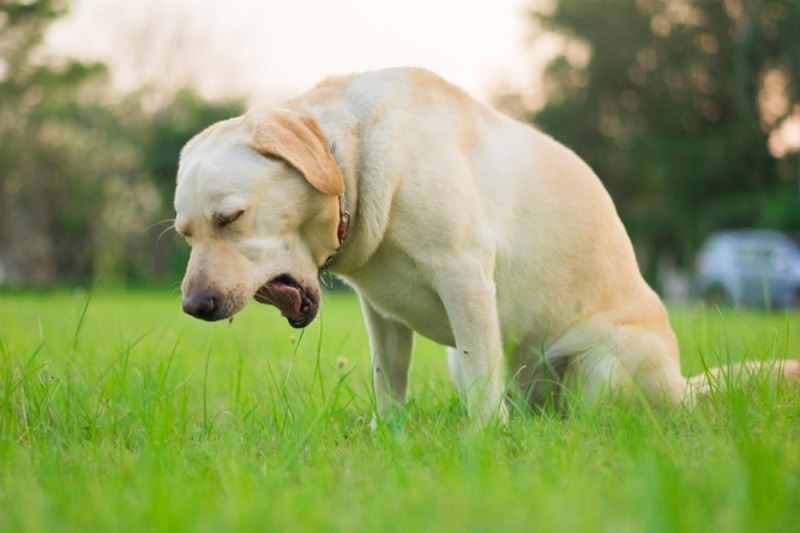
If your senior dog is actively heaving and vomiting, continue reading below.
Top 5 Reasons Your Elderly Dog is Vomiting After Meals
If your old dog is actively throwing up their kibble shortly after breakfast or dinner, veterinarians typically look for these five age-related culprits:
1. Eating Too Fast (Benign)
Sometimes, the simplest answer is the correct one. If a dog scarfs down their meal in seconds, they swallow a massive amount of air. The stomach expands too quickly, sending a signal to the brain to eject the contents.
- Solution: Use a slow-feeder bowl or scatter their kibble on a snuffle mat.
2. Chronic Kidney Disease (CKD) or Liver Failure
This is a major concern for senior dogs. When the kidneys or liver begin to fail, they can no longer properly filter toxins out of the bloodstream. These circulating toxins cause severe nausea and gastric ulcers. When the dog eats, the irritated stomach immediately rejects the food.
3. Pancreatitis
The pancreas produces enzymes that digest food. If an elderly dog eats something too fatty (like human table scraps), the pancreas can become severely inflamed. Pancreatitis causes intense abdominal pain, lethargy, and violent vomiting shortly after trying to eat.
4. Dietary Sensitivities & Changing Digestion
As dogs age, their digestive system becomes less resilient. A brand of kibble they have eaten for 10 years might suddenly become too hard to digest due to a lack of enzymes, causing them to throw it back up.
5. Tumors or Gastrointestinal Blockages
Older dogs are at a higher risk for masses or tumors in the stomach or intestines. These masses can physically block food from passing into the intestines, forcing the stomach to vomit the meal back up.
The “Red Flags”: When to Go to the Emergency Vet
An elderly dog can become dangerously dehydrated much faster than a puppy. Go to the nearest emergency vet immediately if you notice any of the following:
- Blood in the Vomit: Looks like bright red streaks or dark “coffee grounds” (digested blood from an ulcer).
- Unproductive Retching: They are heaving heavily, but nothing is coming out. This is a classic sign of Gastric Dilatation-Volvulus (GDV or Bloat), which is 100% fatal without emergency surgery.
- Severe Lethargy: They cannot stand up, or their gums are pale/white instead of bubblegum pink.
- Repeated Vomiting: They vomit multiple times within a few hours and cannot even keep water down.
What to Do Now (At-Home Management)
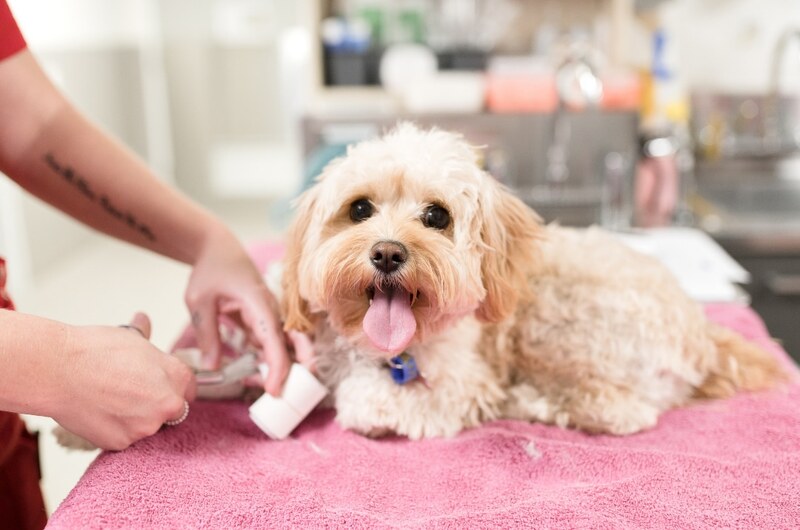
If your senior dog vomited once, is acting completely normal, has pink gums, and is playing or resting comfortably, you can try to manage it at home:
- Withhold Food (The 12-Hour Rest): Pick up the food bowl. Give their irritated stomach 12 to 24 hours to calm down.
- Manage Hydration: Do not let them chug a whole bowl of water, as this will trigger more vomiting. Offer an ice cube to lick, or a few tablespoons of water every hour.
- Start a Bland Diet: After 12-24 hours with no vomiting, offer a very small amount of boiled, unseasoned chicken breast and white rice. If they keep it down, feed small, frequent meals for the next few days before slowly mixing their regular kibble back in.
Final thought: While a young dog throwing up might just be a dietary indiscretion, an elderly dog vomiting after eating should never be ignored. When in doubt, always call your vet for a professional opinion.
Frequently Asked Questions
Why does my old dog drip urine while walking?
If your dog is actively dripping urine while walking or awake, they are suffering from urinary incontinence. In senior dogs, this is most commonly caused by Urethral Sphincter Mechanism Incompetence (weak bladder muscles), prostate issues, or neurological decline.
Does urinary incontinence hurt dogs?
The leaking itself is not painful, but the aftermath is. Urine is highly acidic, and if a dog is constantly dripping, the urine trapped in their fur will quickly cause painful chemical burns known as urine scald. Regular cleaning is essential.
How do you treat a dog that leaks urine while awake?
Treatment depends on the underlying cause. For the most common cause (a weak sphincter), veterinarians typically prescribe daily medications like Proin (phenylpropanolamine) or hormone replacement therapy (estriol) which successfully tighten the bladder muscles and stop the dripping.
Should I use doggie diapers if my dog is dripping pee?
Yes, doggie diapers or male belly bands are excellent management tools to protect your floors and furniture. However, they must be changed frequently, and the dog’s skin must be wiped clean daily to prevent bacterial infections and urine scald.
Related Health Guide:
Senior Dog Throwing Up Yellow Bile: Causes, Home Care & When to Worry

Bol Dang is a lifelong pet lover and the founder of Silver Whiskers Care. After navigating the challenges of caring for his own aging dogs, he dedicated this platform to sharing practical, research-backed advice to help other pet parents improve their senior companions’ quality of life. His mission is to ensure every “silver whisker” spends their golden years in comfort and joy.