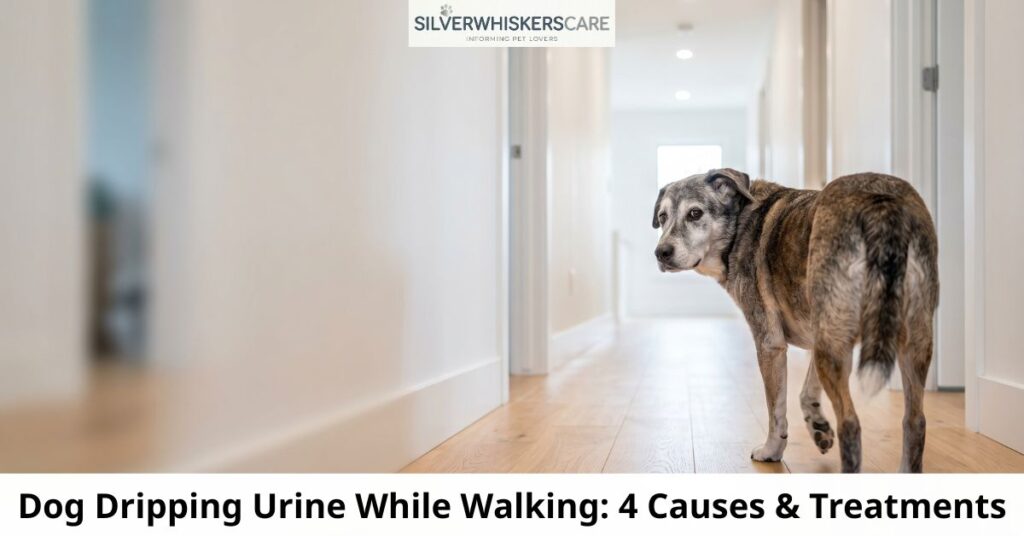
Watching your perfectly house-trained dog dripping urine while walking across the living room is alarming. You might trail behind them, wiping up small drops, wondering if they simply forgot their training.
Let’s set the record straight immediately: If your dog is actively leaking pee while moving around, they are not misbehaving. They are experiencing urinary incontinence—a medical condition where they have completely lost conscious control over their bladder.
In this guide, we will break down the exact medical reasons why your dog is dribbling pee while awake and walking, how veterinarians diagnose it, and the treatments that can stop the leaking for good.
- A dog dripping urine while walking is suffering from urinary incontinence, an involuntary medical condition. Do not punish them.
- The most common cause in spayed females is USMI (Urethral Sphincter Mechanism Incompetence), where a lack of estrogen weakens the bladder muscles.
- In male dogs, dripping while walking can indicate prostate issues or a partial blockage leading to “overflow incontinence.”
- Dripping urine leaves highly acidic residue on the skin, which can quickly cause painful urine scald. Daily hygiene is mandatory.
- Most cases can be successfully treated with daily prescription medications.
Contents
Why is My Dog Dripping Urine While Walking? 4 Medical Causes
Unlike peeing in their sleep, a dog that drips urine while actively moving is often dealing with a structural, hormonal, or neurological issue. Here are the top four culprits according to veterinary experts.
1. Urethral Sphincter Mechanism Incompetence (USMI)
This is the veterinary term for a “weak bladder valve,” and it is the #1 cause of incontinence. It predominantly affects middle-aged to senior spayed female dogs. When estrogen levels drop after spaying, the muscles that hold the urethra closed begin to lose their tone. The pressure of simply walking or trotting is enough to force urine past the weakened sphincter, resulting in a constant drip.
2. Overflow Incontinence (Partial Blockage)
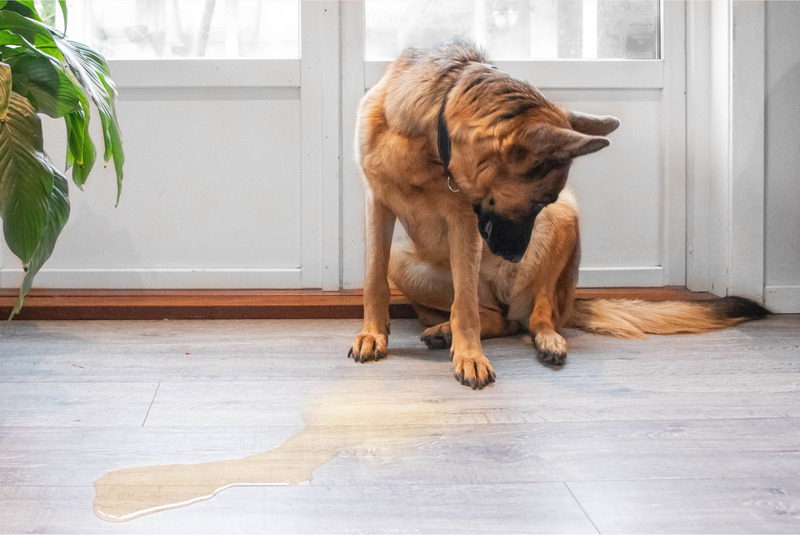
If your dog’s urinary tract is partially blocked by bladder stones, a tumor, or an enlarged prostate (common in unneutered males), they may not be able to empty their bladder completely when they go outside. The bladder becomes dangerously stretched and overfilled. As they walk, the sheer pressure forces small drops of urine to spill out.
3. Spinal or Neurological Issues
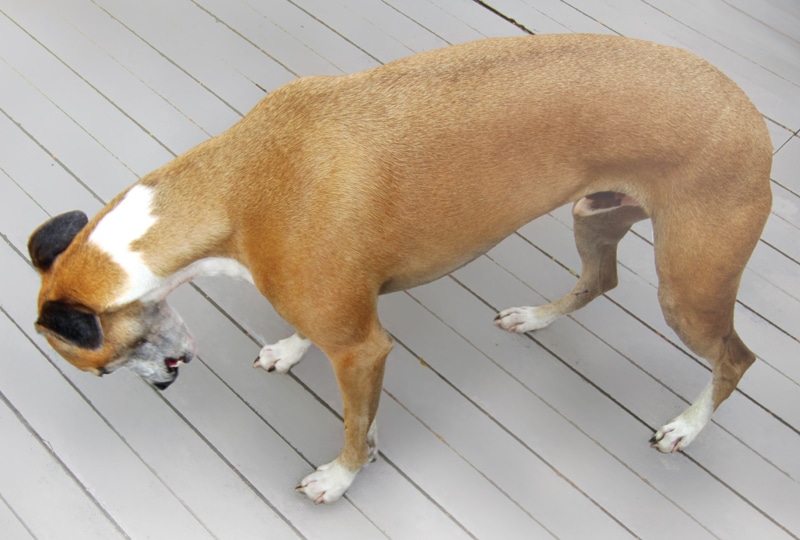
The nerves that control the bladder originate in the lower spine. If your senior dog has spinal arthritis, a slipped disc (IVDD), or age-related nerve degeneration, the communication between the brain and the bladder sphincter gets cut off. If you notice your dog dragging their back paws slightly and dripping urine, it is highly likely a neurological issue.
4. Severe Urinary Tract Infections (UTIs)
While a UTI usually causes a dog to frequently squat and pee small amounts, a severe infection can inflame the bladder so badly that it spasms. These spasms can force urine out involuntarily as the dog moves around the house.
The Hidden Danger: Urine Scald
If your dog is dripping urine while walking, the fur around their hind legs and genitals is constantly wet. Urine is highly acidic and contains bacteria. When it sits on the skin, it causes urine scald—a severe, painful, red chemical burn.
How to protect your dog’s skin:
- Wipe their hindquarters with pet-safe, hypoallergenic grooming wipes 2-3 times a day.
- Apply a vet-approved barrier cream (like a pet-safe petroleum jelly alternative) to protect the skin from the acidic urine.
- Use washable doggie diapers or belly bands while indoors to absorb the drips immediately.
Veterinary Diagnosis & Treatment Options
Because the causes range from simple hormone deficiencies to serious spinal issues, a vet visit is non-negotiable.
What your vet will do:
- Urinalysis: To check for bacteria, blood, or crystals (stones) in the urine.
- Bloodwork: To rule out systemic issues like kidney disease that increase urine volume.
- Physical Exam: To check prostate size in males and evaluate spinal nerve responses.
How to stop the dripping: The good news is that if the diagnosis is USMI (weak sphincter), the treatment is highly effective. Vets commonly prescribe medications like Proin (Phenylpropanolamine), which tightens the sphincter muscle, or Incurin (Estriol), a hormone replacement that restores muscle tone in female dogs. If the cause is a UTI, a round of antibiotics will resolve the leaking.
Conclusion
Seeing your dog dripping urine while walking is stressful, but understanding that it is a physical failing—not a behavioral one—is the first step to helping them. With the right veterinary diagnosis and a simple daily medication, you can protect your floors, heal their skin, and restore your old dog’s dignity.
🔗 Related: Is your dog also having full accidents in their bed overnight? Read our comprehensive guide on Older Dog Peeing in House at Night: 5 Causes & Solutions to learn how to manage nighttime incontinence.

Bol Dang is a lifelong pet lover and the founder of Silver Whiskers Care. After navigating the challenges of caring for his own aging dogs, he dedicated this platform to sharing practical, research-backed advice to help other pet parents improve their senior companions’ quality of life. His mission is to ensure every “silver whisker” spends their golden years in comfort and joy.